“Immune support” is the most-used and least-explained phrase in the entire supplement aisle. It appears on mushroom products because mushrooms genuinely contain compounds that interact with the immune system, and it stays vague because the honest version of the claim is more complicated than fits on a label.
This is the honest version.
What “immune support” actually means
First, a correction to the picture most marketing paints. Your immune system is not a muscle you can pump up, and “boosting” it is not obviously something you would want. An immune system running hotter than it should is what allergies and autoimmune conditions are. The goal of a healthy immune system is not maximum output. It is proportion: responding hard to real threats and standing down the rest of the time.
That is why the word researchers actually use for mushroom compounds is immunomodulating, not immune-boosting. Modulation means adjusting signalling in both directions. It is a less exciting word than “boost” and a far more accurate one, and any product that promises to boost, supercharge, or turbo-charge your immune system has already told you how carefully it reads the research.
Beta-glucans, the compounds doing the work
The reason mushrooms come up in this conversation at all is a family of compounds called beta-glucans: long-chain sugars, polysaccharides, that make up a large share of the cell walls of most fungi. Reishi has them, Lion’s Mane has them, chaga has them, and so does the shiitake in your fridge. They are not rare or exotic. They are structural, the fungal equivalent of cellulose in plants.
What makes fungal beta-glucans interesting is their shape. They are built with a particular branching pattern, and it happens that immune cells in your gut lining carry receptors, dectin-1 is the best characterised, that recognise exactly that pattern. This is not a coincidence: fungi have been part of the environment your immune system evolved in, and recognising fungal cell-wall material is one of its oldest jobs.
So when you eat beta-glucans, some of them reach immune tissue in the gut, get recognised, and produce a measurable response in immune signalling. That much is real, repeatable, and not controversial.
The open question is what that response adds up to in a living, healthy human. Which brings us to the evidence.
What the research shows
Here is the reasonable-confidence pile:
- The receptor biology is solid. How immune cells detect beta-glucans, and what happens in the cell afterwards, has been worked out in detail in laboratory studies. This is textbook immunology, not fringe science.
- Effects are measurable in the lab. In cell cultures and animal models, fungal beta-glucans reliably change the activity of immune cells such as macrophages and natural killer cells. “Change” is the operative word: the effect is modulation of signalling, not a simple volume knob.
- In pharmaceutical settings, purified fungal polysaccharides have been used clinically. In Japan, an injected extract derived from shiitake has been used for decades alongside conventional cancer treatment. That is worth knowing as context for why scientists take these compounds seriously. It says nothing about a tincture or a powder taken at home, which is a different substance, at a different dose, by a different route.
What the research does not show
And here is the part the labels leave off:
- Human trials on oral mushroom products are small, short, and mixed. Most involve fewer than a hundred people, run for weeks rather than years, and measure blood markers rather than outcomes anyone actually cares about, such as getting sick less often. A shifted lab value is a lead, not a result.
- No mushroom product has been shown to prevent illness in healthy people. The trial that would prove it, thousands of people, followed for years, counting infections, has not been run for any mushroom extract we know of. Anyone claiming otherwise is describing a study that does not exist.
- Products vary wildly. Beta-glucan content depends on the species, the part of the fungus used, the growing method, and the extraction. Two bottles with the same word on the front can have very little in common inside. This is a large part of why trial results are inconsistent: the interventions themselves are inconsistent.
- Mechanism is not outcome. “Binds a receptor on an immune cell” and “keeps you healthy through the winter” are separated by a canyon of biology. The first is established. The second is a hypothesis.
The honest summary: fungal beta-glucans are real compounds with well-characterised immune activity in the lab, a long history of dietary use, and preliminary human evidence that is genuinely interesting and genuinely not conclusive. Mushrooms have earned a place in the conversation about immune health. They have not earned the word “proven,” and we are not going to lend it to them.
Food first, extracts second
One thing worth saying plainly: the cheapest and best-supported way to get fungal beta-glucans is to eat mushrooms. A pan of shiitake or oysters delivers them alongside protein, fibre, potassium, and B vitamins, in the form your body has encountered for as long as people have eaten food.
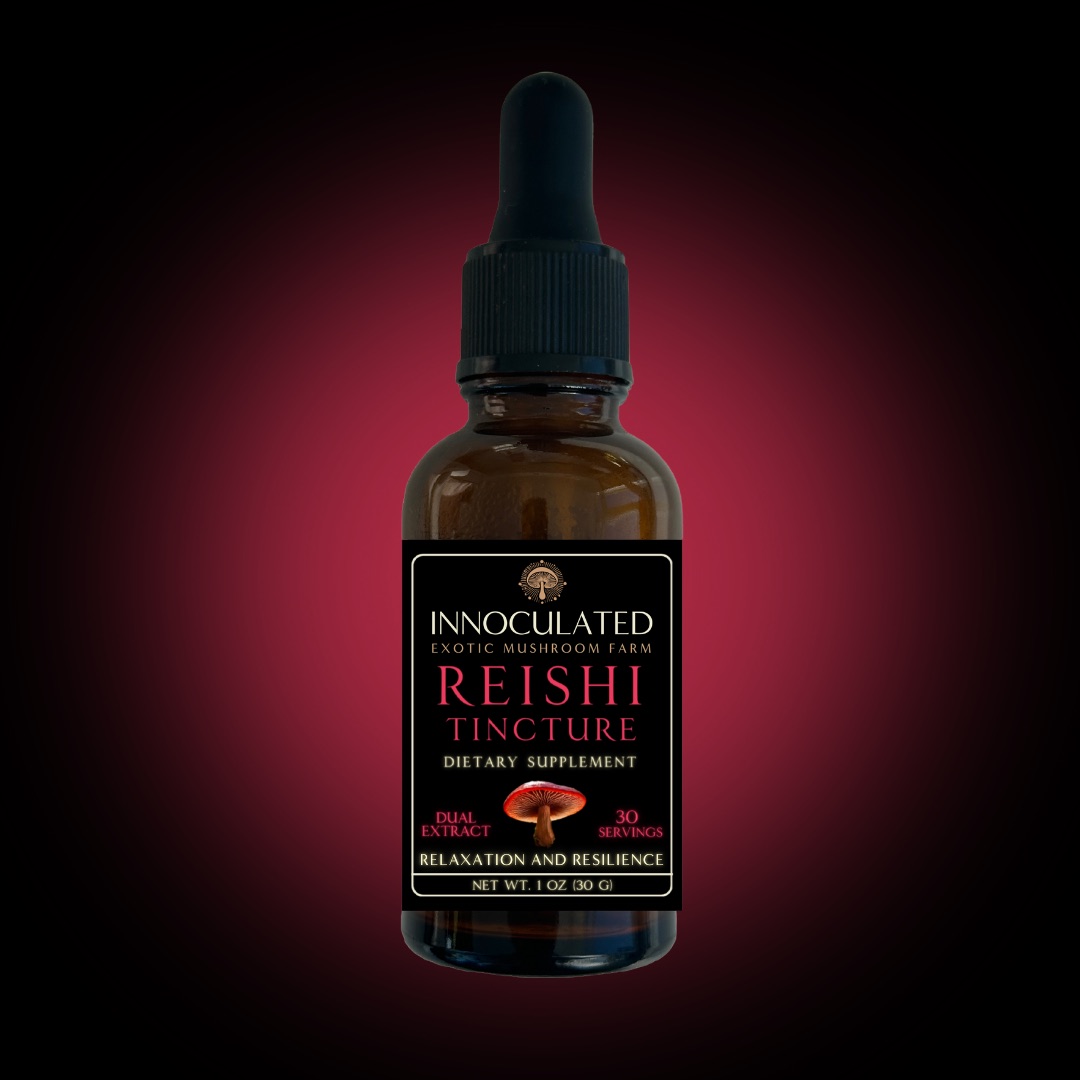
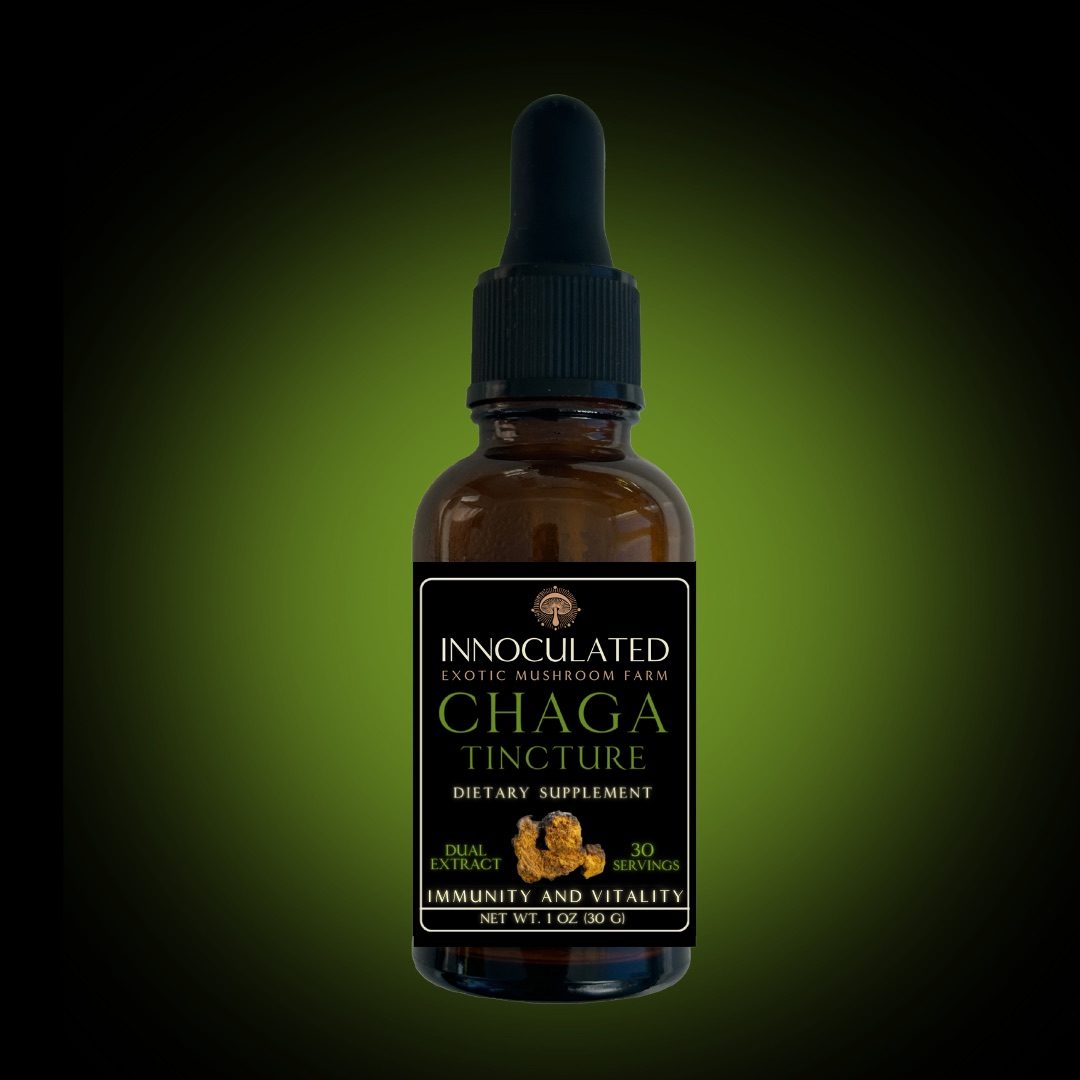
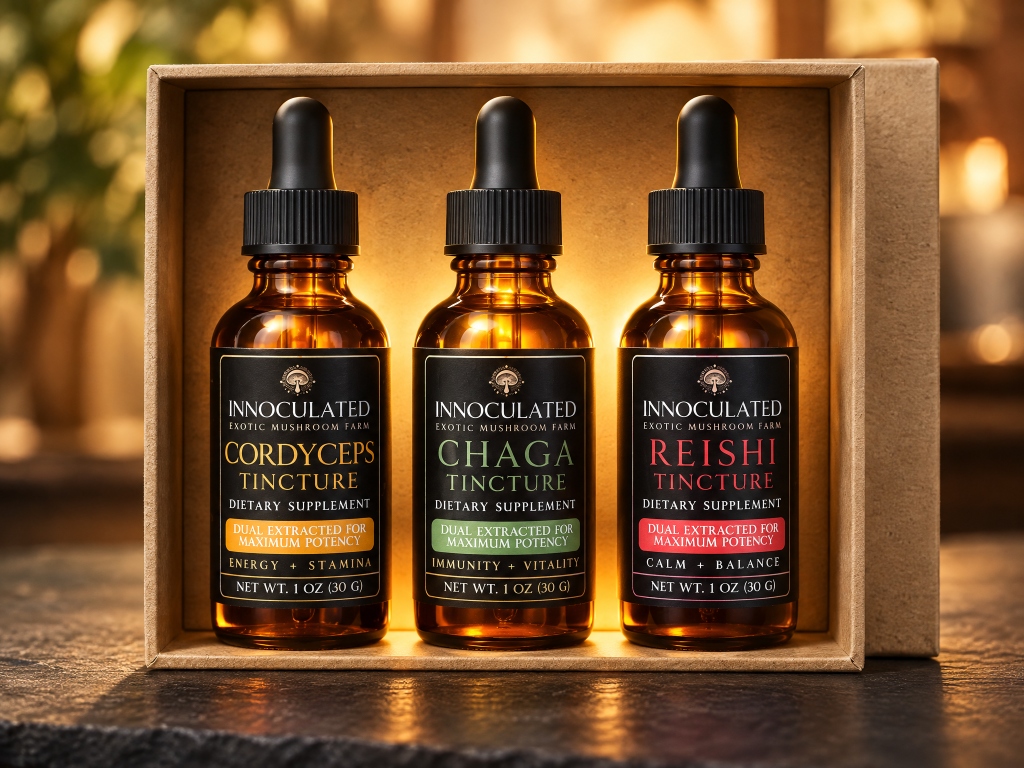
Extracts and tinctures concentrate specific compounds from varieties you would never cook, reishi and chaga chief among them, and they have a sensible place in a routine built on that logic: traditionally used, taken steadily, understood as a tonic rather than a treatment. That is exactly how we sell ours, and it is the only framing the evidence currently supports.
If a product needs you to believe it replaces sleep, food, or a flu shot in order to seem worth buying, it is not worth buying.
Who should be careful
Because these compounds genuinely interact with immune signalling, a few groups should talk to a doctor before adding concentrated extracts to their routine:
- Anyone on immunosuppressant medication, including after an organ transplant. A substance that modulates immune signalling is exactly what your medication is working against.
- Anyone with an autoimmune condition. The theoretical concern runs in the same direction, and the safety data is thin.
- Anyone with a mushroom allergy. Fungal allergies are real and extracts concentrate fungal material.
- Pregnant and breastfeeding people. Not because harm is established, but because safety data is not.
Culinary mushrooms on your plate are a different proposition from daily concentrated extracts, and almost all of the caution belongs to the second.
These statements have not been evaluated by the Food and Drug Administration. Nothing here is intended to diagnose, treat, cure, or prevent any disease. Mushrooms are food, not medicine, talk to your doctor before changing anything about how you manage your health.